An ADA-accessible unit is not just a bigger toilet — it is a footprint and access decision. The larger cabin needs a firm, level pad and a clear path of travel, so placement matters more than it does for a standard…
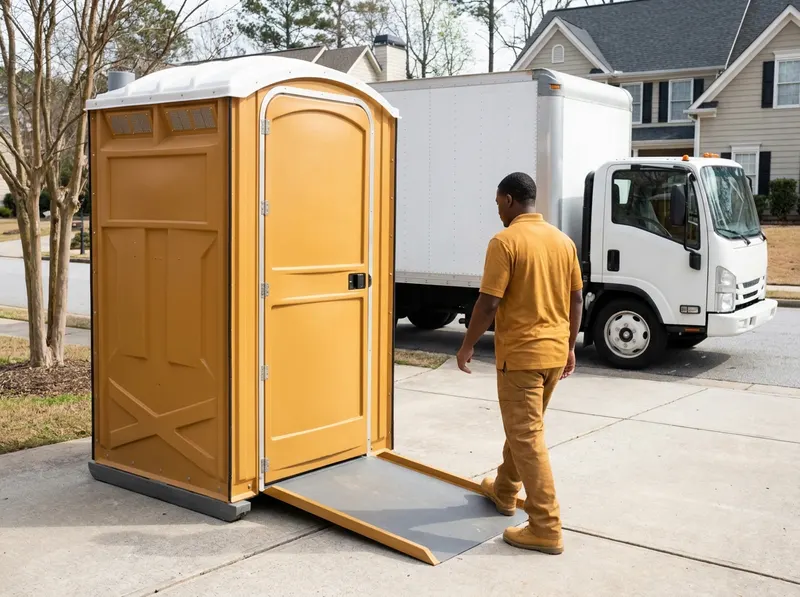
An ADA-accessible unit is not just a bigger toilet — it is a footprint and access decision. The larger cabin needs a firm, level pad and a clear path of travel, so placement matters more than it does for a standard unit. On paved lots in Buckhead or Collier Hills, that is straightforward. On turf at Piedmont Park or the grassy edges along the Atlanta BeltLine Eastside Trail, plan for plywood or a mat under and in front of the door, because soft ground and a 3-4% side slope will defeat a wheelchair before the door even opens. Reynoldstown, Cabbagetown, and Kirkwood bring the opposite problem: narrow streets, tight alleys, and parked cars. Our truck needs roughly 12 feet of width and overhead clearance to set the unit where you actually want it, so tell us on the call if the drop is down an alley or behind a gate.
Choose the ADA unit when the public can reach the restroom area. Festivals in Grant Park near Zoo Atlanta, church and HOA events in West End and Adair Park, weddings and receptions in Virginia-Highland, and film-production base camps parked in Old Fourth Ward all fall into that category. A common and workable ratio is one accessible unit per bank of standard units, positioned at the end of the row on the firmest ground with the door swing facing open space. Standard units cost less and fit tighter spaces, so the trade-off is real: a standard unit serves more people per square foot, while the ADA unit buys you compliance-minded coverage and dignity for guests and crew who cannot use a stepped cabin. Skipping it to save money is the version of this decision that gets noticed — by guests, by an inspector, and by anyone who has to explain it.
Georgia heat is the second reason placement and service frequency matter. Humidity in July turns a neglected tank into an odor complaint within days, and the larger ADA cabin holds more air that heats up. We set a service schedule based on headcount and hours of use, not on a generic weekly default — heavier public traffic in a downtown or Centennial Olympic Park-adjacent setting typically warrants more frequent pump-outs than a five-person framing crew on a residential lot. Shade helps; so does keeping the unit off the sun-facing side of a building where possible.
For construction, the ADA unit answers a specific question superintendents get asked: does the site restroom accommodate a worker with a mobility limitation, and can an inspector or visitor use it. Rentals run by the month with weekly service across Fulton County and the eastern side of the city in DeKalb County. If the unit needs to move as the build progresses — slab to framing to punch list — say so at booking, since relocations are scheduled trips rather than something a driver can do on the fly.
What we will not do is quote you an exact number sight unseen. Access, surface, distance from the truck to the placement point, and service frequency all move the price. A free on-site visit or a clear description over the phone gets you a firm figure, and the ballparks below hold for most Atlanta jobs. Call (404) 537-9079 with your date and address, and we will tell you plainly whether the schedule works.
Every job gets a firm, written price after a free on-site visit.
Tell us about your ada-accessible portable toilet rental job in Atlanta and we'll send a clear, written quote — usually the same day.
 Power Mobile Restroom Solutions