Headcount drives the count, not square footage. OSHA's construction sanitation rule sets one toilet facility for a crew of 20 or fewer, with additional fixtures required as the crew grows — so a five-man framing crew…
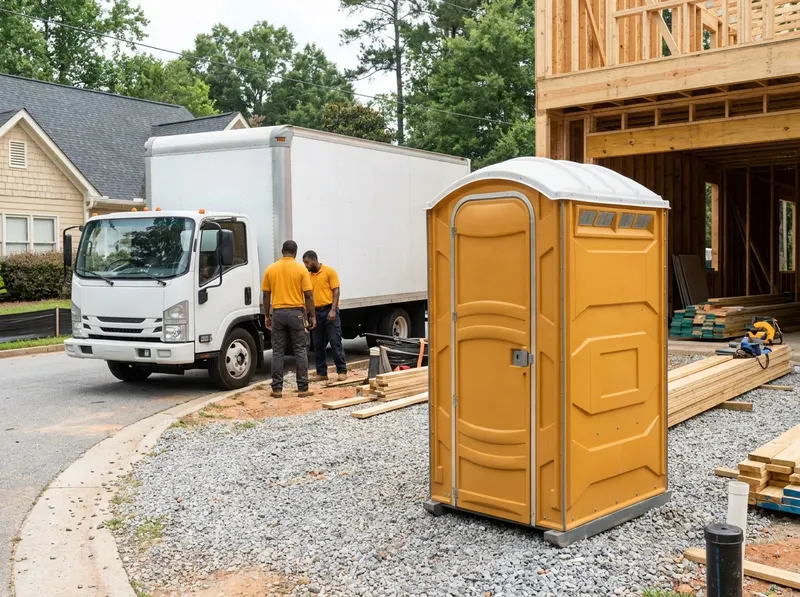
Headcount drives the count, not square footage. OSHA's construction sanitation rule sets one toilet facility for a crew of 20 or fewer, with additional fixtures required as the crew grows — so a five-man framing crew in Kirkwood and a forty-man concrete pour in Buckhead are different orders even if the lot sizes are similar. On long builds the number changes mid-job: one unit through excavation and foundation, two or three once trades stack up, back to one for punch. Tell us the phase and we adjust the count without restarting the rental.
Weekly service is the default on construction work, and it is the part worth scrutinizing. Georgia summer heat and humidity turn a unit that skipped a week into an odor complaint the same day — from the neighbor, the super, or the inspector. Standard construction service is one pump-out per week per unit, and crews of 15 or more, or units left on a site over a long holiday weekend, usually need twice-weekly service instead. Say so up front and it gets built into the route rather than added as an emergency call.
Atlanta access is the other variable. Infill teardowns in Reynoldstown, Adair Park and Cabbagetown often leave a service truck fighting a narrow street with parked cars on both sides, so the unit needs to sit within hose reach of where the truck can legally stop — usually the front setback near the driveway cut, not the back of the lot. Sloped lots in Collier Hills and Virginia-Highland need a level pad; red clay goes to soup after a hard rain and a unit on soft fill will lean. Gravel, a plywood pad, or a spot on the driveway apron solves it. Projects along the BeltLine Eastside Trail in Old Fourth Ward and mixed-use work in West End frequently push the only usable spot into public right-of-way — that permit belongs to the GC or owner, and once you send us the approved location we set to it. Gated subdivisions and Grant Park sites behind construction fence need the gate code or a super on site during the delivery window, since a locked gate turns into a return trip.
The practical comparison: a construction rental beats event-style short-term delivery any time the unit stays past a week, because the monthly rate with routed weekly service costs less than repeated drop-and-pull trips. Go the other direction — a two or three day delivery — only for a single pour, a demo weekend, or a utility crew in and out. The trade-off on a monthly placement is that you're committing to a service day and a fixed location; moving a unit across the lot for a slab pour or a fence change is a relocation trip, not a free adjustment, so it's cheaper to think through the whole build sequence before we set it. We run our own trucks and inventory across Fulton County and the DeKalb side of the city, so the schedule you're quoted is the schedule dispatch is holding.
Every job gets a firm, written price after a free on-site visit.
Tell us about your construction site portable toilet rental job in Atlanta and we'll send a clear, written quote — usually the same day.
 Power Mobile Restroom Solutions